A few posts ago, I told you about one of the strangest toilets I have met, which happened to be in the Okavango Delta in Botswana. The rest of that trip was just as weird. This is the story of the wilderness that wasn’t.
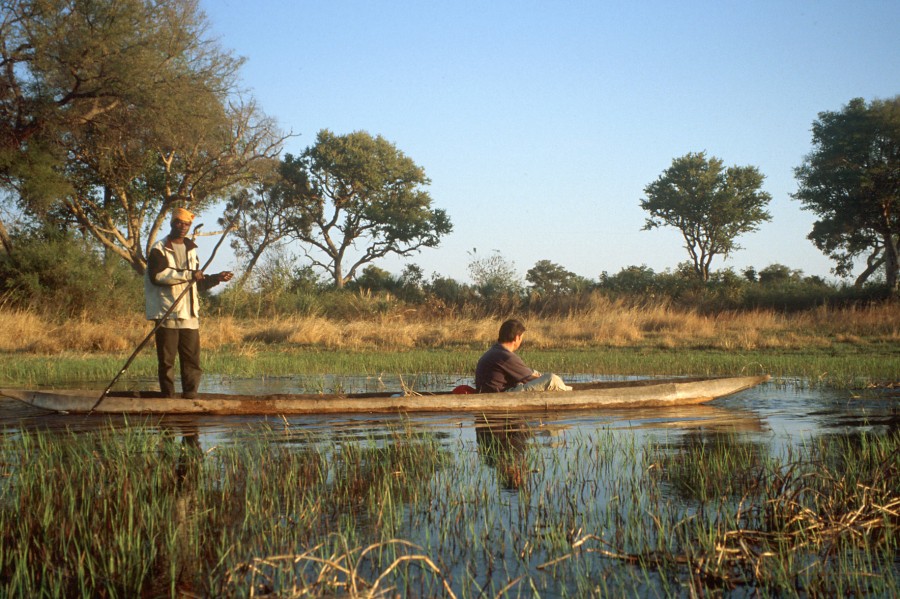
The mokoro canoe slipped silently through the long grass fifty centimetres above the Okavango Delta riverbed. Our native poler, expertly balanced on the back tip, pushed his pole down gently into the water and eased the boat forward. I lay stretched out, my head resting on my sleeping bag. This was the life.
We landed at a clearing in some mopani trees and unloaded tents, camping equipment and packs. This was as far into the wilderness as I had ever been up to that point.
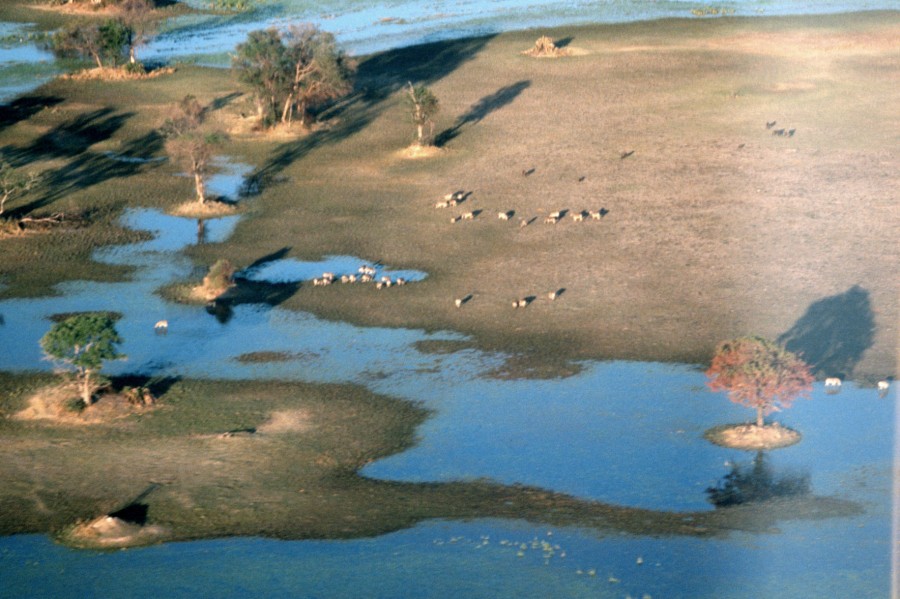
As we settled ourselves into our basic tents, we had the first sign that this wasn’t exactly a wilderness. A motorboat roared past down the Delta, leaving diesel fumes in its wake. This was to be a thrice-daily occurrence at least. How they didn’t end up beached on an island, I had no idea, because the water was only about thirty centimetres deep in most places, with a few slightly deeper canals. Also, there were the Cessna planes that, especially in the late afternoon, flew overhead at a height of about 150 metres, showing tourists the Delta from the air.
Then the others started to arrive. A camp was set up fifty metres to our left. Next, several more mokoros rounded the corner and drew into the shore fifty metres to our right. And holy mercy of God, four kids tumbled out into the water laughing and squealing in delight. We had had incredible difficulty getting any tour into the Delta to accept our eleven-year-old son, so what were these young whipper-snappers doing here polluting our space with noise?
With all the hundreds of islands in the Delta, why on earth were all the tourists setting up camp on our little piece of paradise? We had paid for the experience of being isolated in one of the last wildernesses left on earth, here in Botswana, and we were not happy. Motorboats zipping past, planes low overhead, camps on either side of us, kids screaming. This was no wilderness!
The next morning, in the eerie silence of winter daybreak, temperatures hovering around zero, we put on every item of clothing we owned in preparation to walk across the centre of the island in search of wildlife. We gathered around our native guide, Newman, while he gave us three simple instructions.
“If a lion charges, do not run.” He didn’t follow this up with any further instructions and we stared at him in consternation.
“If a buffalo charges, run to the back of a tree and climb it.” Simple. We just had to find a tree out there in the middle of the grassland.
“If an elephant charges, run upwind zigzag until one of you gets tired.” Hopefully, it would be the elephant.
We all practised grabbing a handful of grass and throwing it into the air to find the wind direction and then ran zigzag upwind. We scattered in all directions and realised most of us didn’t know what upwind meant.
Louise, a part aborigine girl from Darwin, who was here on her honeymoon with husband, Peter, admitted to having an anxiety disorder and she badgered Newman with questions about the exact techniques involved in these evasive actions.
Sarah, a twenty-eight-year old from the USA, was sure Newman should have a gun and mumbled on about AK47s. Our guide smiled indulgently.
Feeling rather unsettled, we followed Newman, in single file out of camp with his co-conspirator, Bright, bringing up the rear. We were gently reprimanded if we stepped out of line.
We walked and we walked and we walked. Lots of grass, most of it burnt ashen grey, sage bushes which smelt of herbal healing, a few buffalo-avoiding trees in the distance, but not one animal.
I was starting to believe this was all a great hoax, that we were in fact on a monstrous movie set being filmed, but then Newman paused. Our heads had all been down, protecting our faces from the cold. We all tumbled into each other. Startled out of their growing complacency, Louise started looking wildly for the nearest tree and Sarah manoeuvred behind her boyfriend, Simon.
Newman pointed and we all strained our eyes to catch a glimpse of what he had seen. Out came our binoculars and there way, way in the distance were a few zebra heads moving above the grass. Respect for our guide’s eyesight shot up several notches.
As we neared the location of the sighting, the zebras became flesh and blood and we walked as quietly as possible towards them to take photos. Then, a movement from our left. An animal – a large one. We all grabbed a handful of grass. No, wait it was too low and long to be an elephant. Dear God, it was a trail of human beings heading for our zebras. The camp full of kids and their parents. Even after walking for two hours, we had not left them behind. They had followed us and were moving in on the only animals in the vicinity, the sprogs’ excited twittering reaching our ears. The zebras looked up, saw them, swirled towards us, saw us and spun in confused circles, before heading off towards the far horizon. So much for photos.
Despondently we walked on and on, the splendid African sunrise momentarily easing the mood, sure we had seen the only animals on the island. No, wait. Newman could see a giraffe head, just to the left of that acacia on the horizon, over by the baobab tree. We gazed obediently into the distance, murmured our agreement and continued plodding behind him. Who gave a damn! Our stomachs were protesting this enforced labour. We wanted breakfast.
An hour later, Newman paused again and we didn’t even lift our weary heads. But this time was different. There were hurried whispers to Bright at the rear. Louise’s fears were becoming a reality. Ahead, off to the side, stood two elephants – a cow and her calf.
“Keep still,” our guide whispered.
No one moved. The elephants didn’t move. We didn’t move.
“Don’t speak.”
We didn’t speak. Two minutes, five minutes. Sarah bent for some grass. “Follow quietly.”
We followed, keeping low in the grass, moving obliquely away from the mother and her baby. Softly, slowly, then faster and faster, but not zigzag. Newman looked like he was gliding across the ground, effortlessly. We were sweating, cursing the mountain of clothes weighing down our bodies, moving at a speed that verged on a run. Resources of strength, fuelled by our fear, helped us maintain this pace for an hour, never looking round, until we were back by our campfire.
As we collapsed in a heap, the adrenaline ebbing away, I had that distinct feeling again that we were on a movie set. A motorboat roared past and two kids screamed as they fell out of the mokoro they were playing in. All we needed now was the plane.



Wow, such craziness for the “wilderness.” But you came home with some great stories…thanks for sharing 🙂
I’m so glad I did it but not sure I could again. It was tough.
Suzanne